The Suffolk Design Festival 2025: Innovation in placemaking
By Lizzie
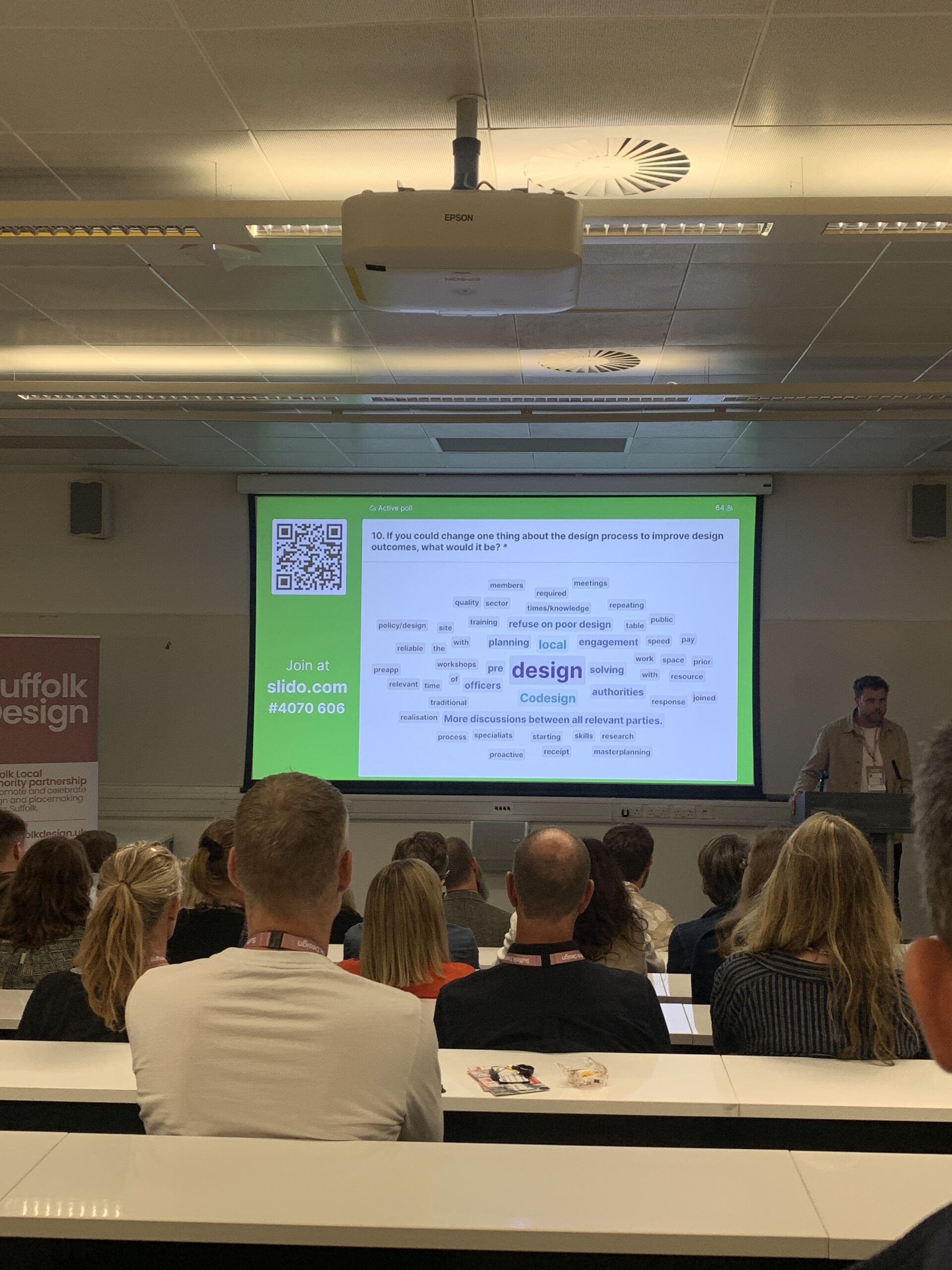
In May, Christophe and Lizzie went to the Suffolk Design Festival, an event exploring the theme of placemaking and design. The day was organised by Suffolk Design, a collaboration between all local authorities and county councils in Suffolk.
The day included presentations from different perspectives across the industry. Speakers included representatives from local authority planning departments, private practices and consultancies. Sessions discussed innovative approaches to achieving collaborative design that delivers a high quality of place and buildings.
Clearly, each part of the industry faces challenges. There’s a need to balance quality with delivering the quantity of housing that communities currently need.
However, the fact the festival was organised by a partnership between county councils and local authorities shows commitment to tackling these challenges. There is a strong drive to promote and celebrate what good design can achieve for communities and the environment.
Workshop: Healthy streets
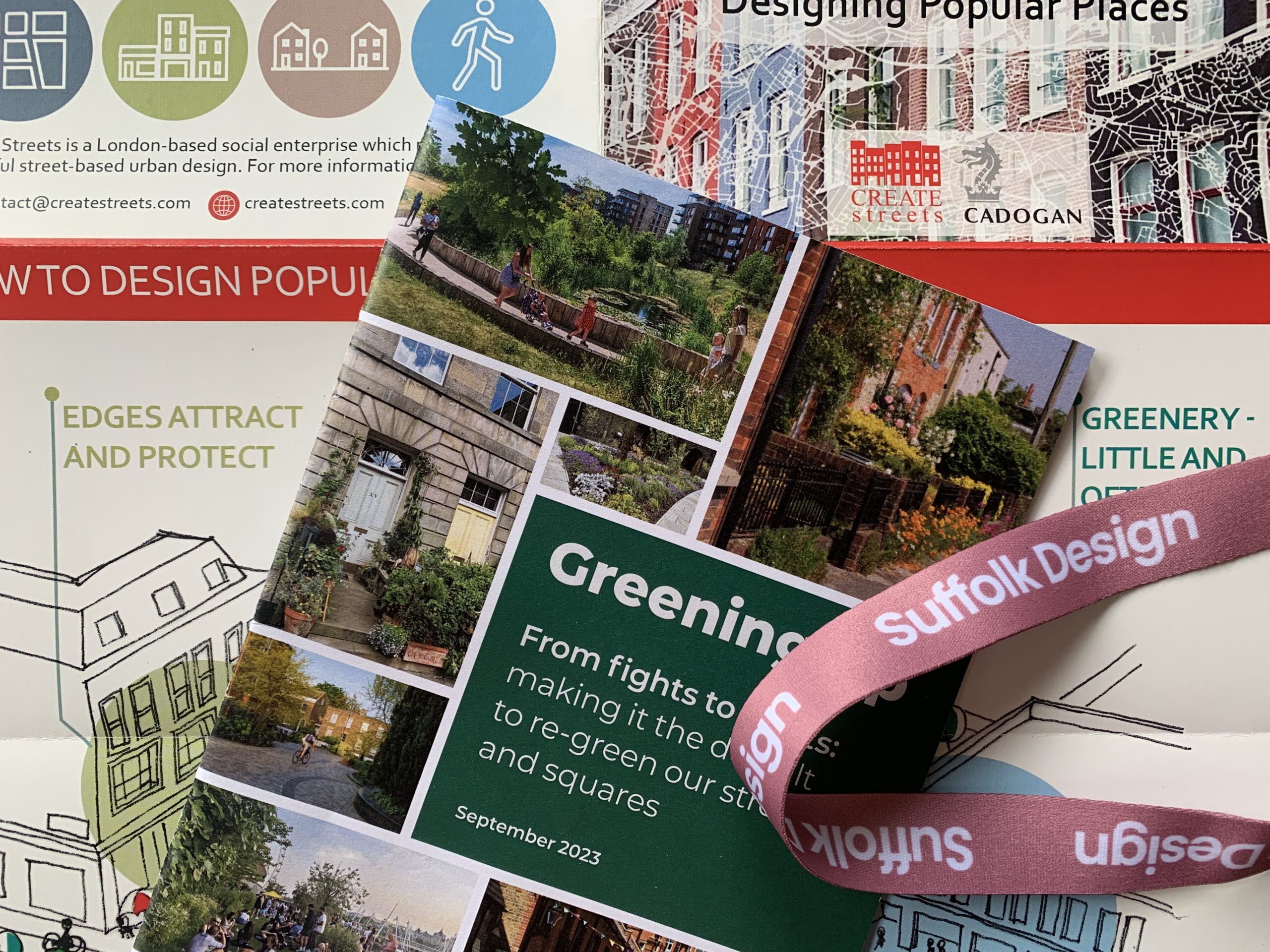
Create Streets, a design practice and thinktank, ran a workshop on the benefits of designing healthy streets. The team showed examples of successful and unsuccessful streets in terms of how they prioritise people.
Attendees did an exercise in groups, critiquing a masterplan of a housing development based on the principles Create Streets had introduced. We then presented our assessments and ideas for how to improve the design to create a healthier development.
It was interesting to see how teams comprised people from different sectors and professions. This mix reflects how projects need input from many different points of view in reality.
Workshop: Preserving local identity and heritage
This workshop explored the theme of ‘9 degrees of awareness’, delivered by Paulette McAllister from consultancy Joseph Hardy & Company. The aim was to encourage attendees to think about a location in different ways.
The first exercise asked attendees to consider a place important to them or their work. With closed eyes, we had to draw a simple line street plan and then ask a neighbour what they saw. Next, we drew the outline of the landscape and again asked a neighbour to interpret.
Paulette then invited attendees invited to choose either a bag of soil, a bag of sawdust, a piece of wood, or a sprig of rosemary. The question to consider was: what memories or emotions do these aromas say to you beyond the actual reality of the item?
As the exercise went on, bringing in the detail of our chosen location’s buildings and their fabric, we were asked to use senses, memories and emotions to determine the way a certain area resonates. The result was an interesting perspective on how to assess local character.